


 русский
 Español


PP Film Blowing Machines: Unlocking New Potential in Polypropylene Film Applications
 By Admin
Market Competitiveness Analysis of High-Speed Film Blowing Machines
High-speed film blowing machines have gained attention in the market due to their ability to support higher production volumes while maintaining steady operation. These machines typically feature advanced screw designs and improved air ring systems that allow for faster bubble formation and cooling. As a result, manufacturers can achieve increased output per hour, helping them respond to larger orders from packaging converters and industrial users.
High‑speed models own their market position by delivering a killer combo: speed you can count on. Shorter cycle times mean facilities sync seamlessly with just‑in‑time demands—because nobody likes waiting. Add digital controls that give operators a real‑time window into melt temperature and blow‑up ratio, and film gauge stays consistent from the first meter to the last.
Competition in this segment also considers factors such as maintenance intervals and compatibility with different resin types, including LDPE, HDPE, and blends. Machines that handle a wider range of materials without frequent die changes tend to attract facilities looking for operational flexibility. Over time, these capabilities contribute to a machine’s overall value in a market where production efficiency influences cost structures and delivery performance.
How to Choose an Energy-Efficient Film Blowing Machine?
Selecting an energy-efficient film blowing machine requires careful review of several practical aspects that affect long-term operating costs and performance. Start by examining the drive system and motor technology. Machines equipped with servo or variable frequency drives often consume less power during extrusion and winding stages compared to older constant-speed models.
Next, consider the heating and cooling systems. Modern designs with insulated barrels and efficient air rings help maintain stable temperatures while reducing energy loss. Checking the specific energy consumption rating, usually listed in kilowatt-hours per kilogram of film produced, provides a useful comparison point between different models.
Another important factor is the overall line configuration. A well-matched die, air ring, and haul-off unit can improve bubble stability and reduce the need for excessive cooling or reheating. Facilities should also evaluate the control interface for ease of setting and adjusting parameters, as precise control helps avoid wasteful trial runs during material changes.
Space requirements and future expansion potential matter as well. Compact energy-efficient lines may suit smaller plants, while modular designs allow gradual upgrades. Finally, review the availability of technical support and spare parts, since reliable service helps keep the machine running efficiently over years of operation. By weighing these elements together, buyers can identify a film blowing machine that aligns with both current energy goals and production needs.
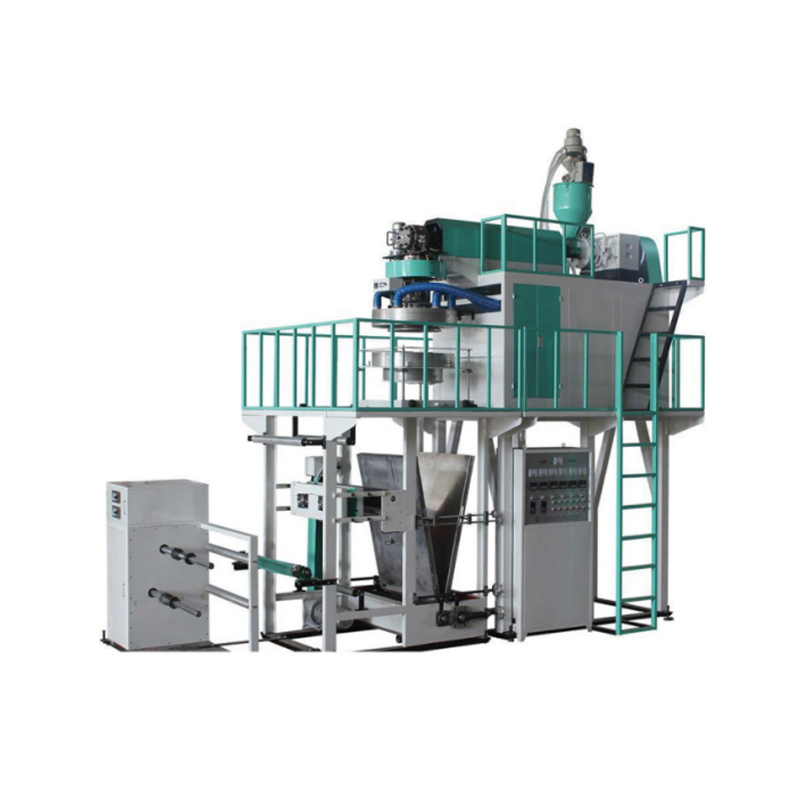
Capacity Improvement and Quality Control in PP Film Blowing Equipment
PP film blowing machine has seen steady progress in capacity enhancement while maintaining focus on quality control. Newer screw geometries and optimized temperature profiles allow higher melt throughput without compromising the uniformity of the polypropylene film. This results in increased kilograms per hour, enabling producers to meet growing demand for PP films used in food packaging, medical applications, and industrial wraps.
To support higher capacity, many lines incorporate improved cooling systems that stabilize the bubble more quickly, allowing faster take-up speeds. Automated thickness gauges placed around the bubble provide continuous feedback, helping operators make small adjustments to maintain even gauge distribution across the width of the film.
Quality control and speed? They're best friends here. Real‑time monitoring keeps a hawkish eye on melt pressure, bubble diameter, and frost line height. If something goes even slightly off, the machine either nudges the operator or fixes itself on the fly—killing defects like gels, uneven thickness, and rough surfaces before they ever happen.
