


 русский
 Español


How Does an Express Bag Blown Film Machine Handle Different Materials?
 By Admin
An express bag blown film machine plays a central role for companies producing courier bags, mailer bags, and other express delivery packaging. As online shopping and logistics volumes continue to shape packaging demand, this type of equipment has become a familiar fixture in facilities that need to keep up with steady, high-turnover production.
At its core, this machine works by melting plastic resin and extruding it through a circular die, forming a continuous tube of film that gets inflated with air to reach the desired thickness and width. Once cooled, the film is flattened, wound, and later converted into finished bags through additional processing steps like sealing, printing, and cutting. For express bags specifically, the film often needs a certain level of opacity and tear resistance, since these bags are handled frequently during shipping and sorting.
Buyers exploring this equipment usually want to understand how output capacity and film specifications align with their production goals. Machines vary in screw diameter, extrusion speed, and die size, all of which influence how much film can be produced within a given timeframe. Facilities running high order volumes typically look for machines that can maintain steady output without frequent adjustments, while smaller operations may prioritize flexibility over sheer volume.
Material compatibility is another point buyers often bring up. Many express bag blown film machines are designed to handle polyethylene resins, including LDPE, HDPE, and blends that improve strength while keeping material costs manageable. Some setups allow for multi-layer film production, which can improve durability or allow for specific printing surfaces without significantly changing the overall process.
When comparing machine options, buyers commonly weigh a few practical factors:
- Film width range and how it matches intended bag sizes
- Extrusion consistency across long production runs
- Ease of adjusting thickness for different bag types
Automation level is a growing area of interest as well. Some machines include automatic thickness control systems that adjust die gaps in real time, helping maintain more consistent film quality throughout a production run. Others offer manual controls, which can suit smaller operations that prefer more hands-on adjustments during setup.
Winding systems also vary between machine models. Surface winders are common for standard production needs, while center winders may be preferred for facilities producing thicker or heavier film rolls that require more precise tension control. The choice often comes down to the specific bag weight and roll size a facility plans to work with regularly.
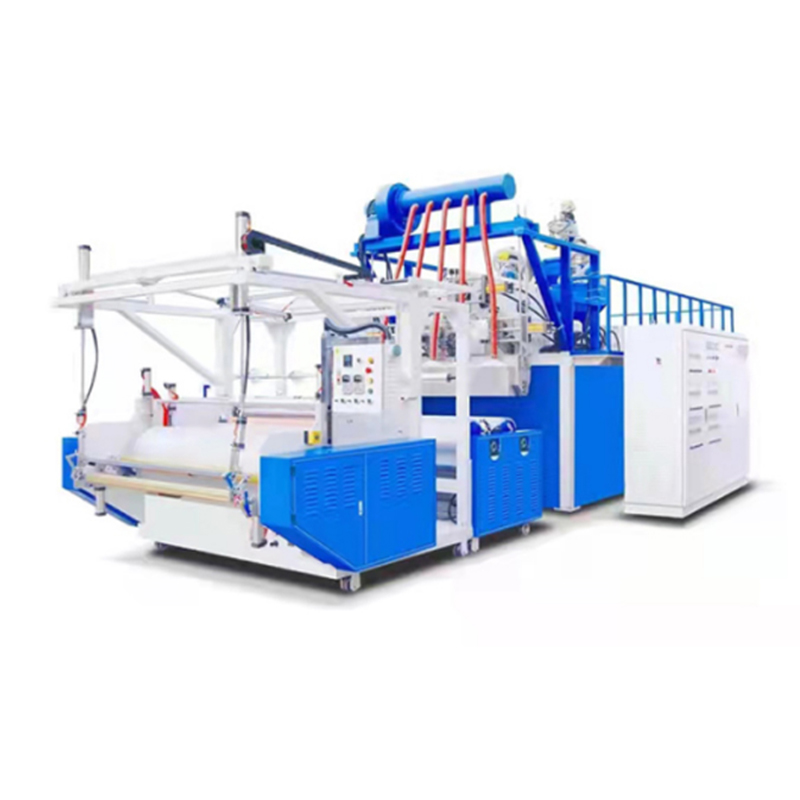
For companies scaling up production, integration with downstream equipment matters as well. An express bag blown film machine typically feeds into bag-making machines that handle sealing, punching, and printing. Buyers often ask whether a blown film line can be paired smoothly with their existing bag-making setup, since compatibility between these stages affects overall workflow efficiency.
Facility layout and space requirements are practical considerations too, and they tend to catch buyers off guard more often than expected. These express bag blown film machines can vary significantly in footprint depending on output capacity, so buyers evaluating new equipment often factor in ceiling height, floor space, and how the machine will fit alongside existing production lines. Even a few extra feet of clearance around the extruder or winder can change how smoothly daily operations run.
